


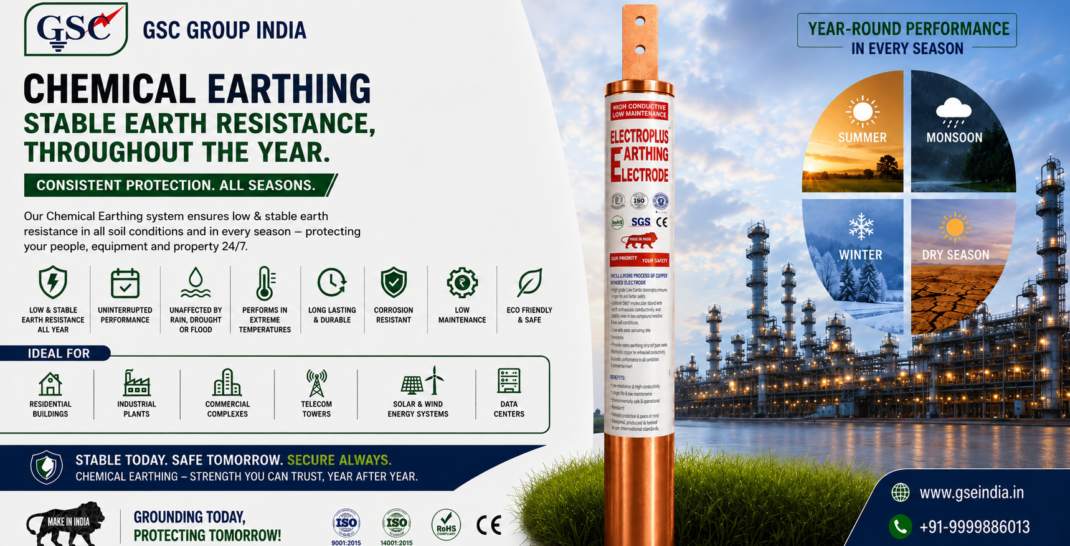
Lightning protection systems are designed to provide a safe and controlled path for lightning current to flow into the ground. A reliable grounding arrangement is therefore one of the most important parts of any lightning protection installation. Among the different grounding methods available today, chemical earthing is widely used where stable and low-resistance earthing is required. But is chemical earthing suitable for lightning protection systems? The answer is yes—when it is properly designed, installed, and maintained according to the requirements of the project.
Understanding Chemical Earthing
Chemical earthing is a grounding method in which an earthing electrode is installed in the soil along with an earth-enhancing or conductive compound. The compound helps improve the electrical conductivity around the electrode and can provide more consistent grounding performance, particularly in soil conditions where achieving a suitable earth resistance through conventional methods may be difficult.
A chemical earthing system generally consists of an earthing electrode, conductive backfill material, connection accessories, and an appropriate conductor connecting the electrode to the electrical or lightning protection system. Depending on the application, electrodes can be manufactured using materials such as galvanized iron, copper, or copper-bonded steel.
Why Earthing Is Important for Lightning Protection
A lightning protection system may include air terminals, down conductors, bonding components, and an earthing network. When lightning strikes a protected structure, the system must provide a low-impedance path that safely carries the lightning current from the air terminal through the down conductor and into the earth.

If the grounding system is poorly designed, the lightning current may encounter excessive impedance. This can increase the possibility of dangerous potential differences, side flashing, equipment damage, or electrical hazards.
For this reason, the grounding system should not simply be selected based on its earth resistance value. The electrode arrangement, conductor size, connections, soil conditions, installation depth, and overall lightning protection design should also be considered.
Can Chemical Earthing Be Used for Lightning Protection?
Yes, chemical earthing can be used for lightning protection systems, provided the complete system is engineered for lightning-current discharge.
One important consideration is that lightning is a high-frequency transient event. Therefore, the design should consider the impedance and inductive characteristics of the complete current path rather than focusing only on the conventional earth resistance measured under normal conditions.
A properly installed chemical earthing electrode can help establish an effective connection with the surrounding soil. However, the lightning protection system should be designed as an integrated system, including suitable down conductors, bonding, connections, earth pits, and an appropriate number and arrangement of earth electrodes.
Role of a Copper Bonded Rod
A copper bonded rod is another commonly used component for grounding applications. It consists of a steel core with a bonded copper layer that provides mechanical strength along with good electrical conductivity and corrosion resistance.
Copper bonded rods can be suitable for lightning protection earthing because they are designed to provide a durable connection with the surrounding soil. Their mechanical strength allows them to be driven or installed into suitable soil conditions, while the copper exterior provides a conductive and corrosion-resistant surface.
When used as part of a chemical earthing arrangement, a copper bonded rod can be installed with an appropriate conductive backfill compound. The combination can help create a reliable grounding electrode system, particularly where soil resistivity is relatively high.
Advantages of Chemical Earthing for Lightning Protection
There are several reasons why chemical earthing may be considered for lightning protection applications:
1. Improved grounding performance: Conductive backfill materials can improve the conductivity around the electrode and help create a more effective electrical connection with the soil.
2. Suitable for challenging soil conditions: Chemical earthing can be useful in areas where natural soil conductivity is poor or where achieving the desired grounding performance with conventional electrodes is difficult.
3. Long-term performance: When suitable electrode materials and high-quality earthing compounds are used, the system can provide reliable service over an extended period.
4. Flexible installation: Chemical earthing systems can be designed according to site conditions, available space, soil characteristics, and the requirements of the lightning protection system.
5. Corrosion considerations: Selecting a suitable electrode material, such as a copper-bonded electrode, can help improve resistance to corrosion and support longer service life.
Chemical Earthing vs. Conventional Earthing for Lightning Protection
The choice between chemical and conventional earthing should be based on the specific project rather than assuming that one method is always better.
Conventional earthing may be sufficient where soil conditions are favorable and the required grounding performance can be achieved with an appropriate electrode arrangement. Chemical earthing may be considered when soil resistivity is high, space is limited, or more consistent grounding performance is required.
For lightning protection, the most important objective is to provide a properly engineered and suitably sized path for lightning current. The electrode type alone does not determine the effectiveness of the complete lightning protection system.
How Should Chemical Earthing Be Installed?
A chemical earthing installation should begin with an assessment of the site and soil conditions. The required electrode type, length, number of electrodes, spacing, conductor arrangement, and backfill material should then be selected according to the project requirements.
The earthing electrode should be properly positioned and connected to the lightning protection down conductor using suitable clamps or approved connection methods. The conductive compound should be installed around the electrode as recommended by the manufacturer.
For larger buildings, industrial facilities, telecom towers, solar plants, substations, and other critical installations, multiple interconnected earth electrodes may be required. The grounding network should also be properly bonded to minimize potential differences during a lightning event.
Important Considerations
It is important to understand that chemical earthing is not a replacement for the complete lightning protection system. It is one component of the grounding arrangement.
The overall system should be designed by considering lightning protection standards, soil resistivity, structure height, risk level, electrode configuration, conductor routing, bonding requirements, and applicable electrical regulations.
Regular inspection and testing are also recommended to verify that the earthing system continues to perform effectively. Connections should be inspected for corrosion, looseness, or physical damage, while earth resistance and other relevant parameters should be tested using suitable procedures.
Conclusion
So, is chemical earthing suitable for lightning protection systems? Yes, it can be an effective grounding solution when correctly designed and installed for the specific application. A well-engineered chemical earthing system can provide a reliable connection between the lightning protection network and the earth, especially in challenging soil conditions.
Using a suitable copper bonded rod with an appropriate earth-enhancing compound can further support a durable and efficient grounding arrangement. However, the complete lightning protection system—including air terminals, down conductors, bonding, connections, and earthing electrodes—must be designed as one integrated system.
For industrial, commercial, residential, telecom, renewable energy, and infrastructure projects, selecting the right earthing solution should always be based on site conditions, technical requirements, applicable standards, and professional engineering assessment.