


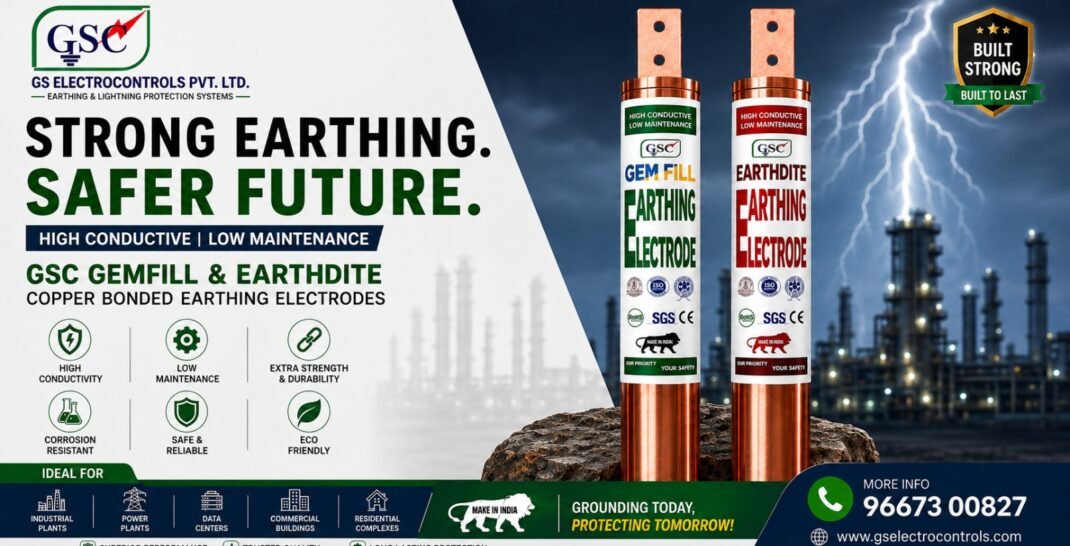
Electrical safety depends on more than quality cables, switches, and protective devices. A properly designed earthing system is equally important because it provides a controlled path for fault current and helps protect people, equipment, and infrastructure. One of the most important questions while selecting an earthing solution is whether it can maintain a stable earth resistance under changing environmental conditions.
So, can Chemical Earthing provide stable earth resistance throughout the year? The answer is yes—when the system is properly designed, installed, and maintained. Chemical Earthing is specifically developed to improve grounding performance in different soil conditions and reduce the seasonal variations that can affect conventional earthing systems.
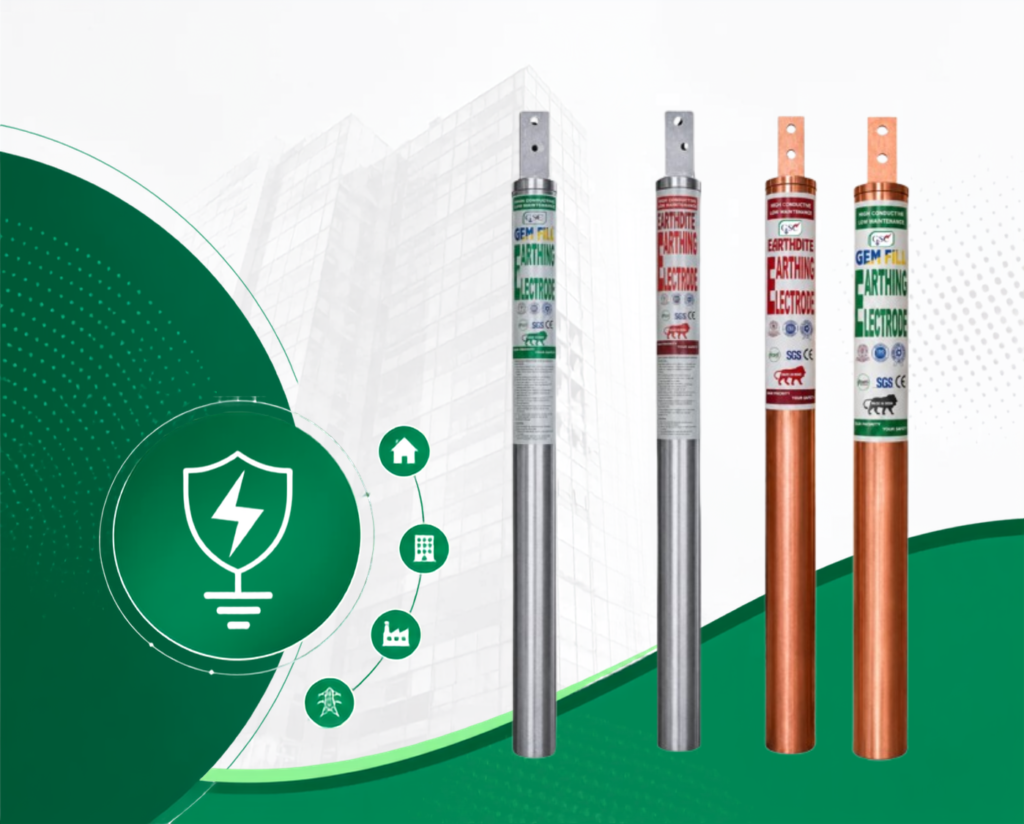
According to GSC Group India, its Chemical Earthing systems are designed for low-resistance grounding across different soil conditions and are intended to provide stable performance even in challenging environments.
Why Does Earth Resistance Change Throughout the Year?
Earth resistance is not necessarily a fixed value. It can change depending on several environmental and installation-related factors. **Soil moisture, temperature, soil composition, electrode depth, electrode condition, and the quality of the connection can all influence grounding performance.
During dry summer months, soil may lose moisture and its electrical resistivity can increase. This can cause the resistance of a conventional earthing installation to rise. During the monsoon, increased moisture may temporarily improve soil conductivity and reduce measured earth resistance.
These seasonal variations can become a concern for installations where reliable grounding is required throughout the year. Industrial plants, data centres, telecom towers, substations, commercial buildings, renewable energy installations, and other critical facilities require an earthing system capable of delivering consistent performance.
This is where Chemical Earthing can offer an important advantage.
How Does Chemical Earthing Help Maintain Stable Resistance?
Chemical Earthing uses an earthing electrode along with a conductive backfill or earth-enhancement material around the electrode. The material is intended to improve the contact between the electrode and surrounding soil and create a more favourable conductive environment.
Unlike a basic earthing arrangement that relies heavily on the natural conductivity of the surrounding soil, a properly installed Chemical Earthing system can help reduce the impact of variations in soil conditions.
The objective is not simply to achieve a low resistance value immediately after installation. A well-designed system should continue to provide dependable grounding performance over its service life.
GSC Group India describes its Chemical Earthing solutions as providing low-resistance grounding in different soil conditions, with applications including power plants, telecom towers, data centres, substations, manufacturing facilities, and commercial buildings.
The Role of the Earthing Electrode
The electrode is one of the most important components of an earthing system. Its material, dimensions, installation depth, corrosion resistance, and connection quality all influence the overall performance of the grounding arrangement.
For demanding installations, Copper bonded coil earthing can be considered as part of an appropriately engineered grounding system. Copper provides excellent electrical conductivity, while a properly manufactured bonded construction can provide mechanical strength and corrosion resistance.
GSC Group India also offers copper bonded rods designed with a copper layer bonded over a steel core. According to the company, this construction is intended to provide conductivity, corrosion resistance, mechanical strength, and extended service life.
The selection between different electrode configurations should always be based on soil characteristics, required resistance, installation conditions, fault-current requirements, applicable standards, and project specifications.
Copper Earthing Strip for Reliable Connections
An earthing electrode alone does not complete the grounding system. The electrode needs to be properly connected to the equipment, structure, main earthing bar, or other parts of the grounding network.
A Copper Earthing Strip is commonly used where a highly conductive and durable connection is required. Copper offers excellent electrical conductivity and can provide a reliable route for fault current when correctly sized and installed.
The connection between the electrode and the earthing conductor is particularly important. Poor joints, loose connections, corrosion, or inadequate conductor sizing can negatively affect the performance of an otherwise well-designed earthing system.
Therefore, maintaining stable earth resistance is not only about selecting a chemical compound or electrode. The complete grounding arrangement—including electrodes, conductors, joints, connections, and soil conditions—must be considered as one system.
Can Chemical Earthing Eliminate Seasonal Variations?
It is important to understand that Chemical Earthing does not mean earth resistance will remain mathematically identical throughout the year.
Soil is a natural environment, and its electrical properties can change with weather and moisture conditions. However, a properly designed Chemical Earthing system can help minimise the effect of these variations and provide more consistent grounding performance than an inadequately designed conventional system.
The actual resistance achieved depends on factors such as soil resistivity, electrode arrangement, installation depth, backfill material, electrode surface area, number of electrodes, spacing, and the overall grounding design.
This means that claims of a specific resistance value for every site should be treated carefully. A professional site assessment and appropriate earth resistance testing are essential before finalising an earthing design.
Chemical Earthing and Lightning Protection
Stable grounding is also an important part of an effective lightning protection system. Lightning currents are extremely high, so the grounding network must provide a suitable low-impedance path to dissipate energy safely into the earth.
A Copper Lightning Arrester can form an important part of a lightning protection arrangement by helping intercept or control lightning discharge and connect the protection system to the grounding network.
However, a lightning arrester should not be considered in isolation. The down conductors, bonding arrangements, earth electrodes, connections, and overall grounding network must be appropriately designed together.
For buildings and infrastructure exposed to lightning risk, combining an appropriately designed earthing system with a properly engineered lightning protection system can significantly improve electrical safety.
What Makes an Earthing System Reliable Throughout the Year?
Several factors contribute to long-term grounding performance:
1. Proper soil assessment:
Understanding soil resistivity helps engineers select an appropriate electrode arrangement and grounding method.
2. Correct electrode selection:
Electrode material, dimensions, configuration, and corrosion resistance should match the application.
3. Quality earth-enhancement material:
In Chemical Earthing, the surrounding conductive material should be suitable for the intended application and installed correctly.
4. Reliable connections:
Connections between electrodes, strips, conductors, and equipment must be mechanically secure and electrically sound.
5. Adequate installation depth:
Electrode placement should be based on site conditions and the design requirements rather than simply following a one-size-fits-all installation method.
6. Periodic testing:
Earth resistance should be measured at appropriate intervals to verify that the grounding system continues to perform as intended.
7. Professional installation:
Even high-quality earthing components cannot compensate for poor installation practices. Design, installation, testing, and maintenance all influence long-term performance.
Is Chemical Earthing a Good Choice?
For applications where consistent grounding performance is important, Chemical Earthing can be a practical solution, particularly where soil conditions are challenging or seasonal variations are a concern.
Its advantages can include improved conductivity around the electrode, better grounding performance in difficult soil conditions, and reduced sensitivity to some environmental changes. GSC Group India specifically positions its Chemical Earthing systems for applications requiring low-resistance grounding and long-term performance.
Nevertheless, the right earthing solution should always be selected according to the site rather than simply choosing a product based on a promised resistance value.
Conclusion
So, can Chemical Earthing provide stable earth resistance throughout the year? Yes, a properly designed and installed Chemical Earthing system can help maintain more consistent earth resistance despite seasonal changes in soil moisture and environmental conditions.
However, stable performance depends on the complete grounding system—not just the chemical backfill. The right electrode, high-quality conductors such as a Copper Earthing Strip, suitable configurations such as Copper bonded coil earthing, reliable joints, proper installation, and periodic testing all play important roles.
For projects where electrical safety and lightning protection are critical, a properly engineered grounding system should be considered an essential investment rather than an optional component.
GSC Group India provides grounding and lightning protection solutions, including Chemical Earthing and copper bonded earthing products, for residential, commercial, industrial, and infrastructure applications. To explore its solutions or discuss your project requirements, visit our website at gscgroupindia.com.